Bali Investment Guide

Category: Uncategorized
  • Two Bali Itineraries, Two Keys: When A Chauffeured Alphard Beats The Self-Drive BMW (And When It Doesn’t)

    If you’re visiting Bali to scout investments or manage a villa portfolio, the right luxury car setup depends on how you’ll actually use your days. For concentrated meeting days, a chauffeur-driven van or sedan usually wins; for slow reconnaissance and beach hopping, self-drive often gives better value.

    • In 2026, chauffeur-driven luxury cars typically start around USD 120 per 8–10 hour day, often including fuel.
    • Self-drive premium SUVs and sedans commonly range from about USD 120–300 per 24 hours, depending on brand and insurance.
    • Expect deposits from IDR 1–3 million for standard cars and higher for luxury or exotics, held by cash or card.
    • Plan 60–90 minutes from touchdown to sitting in your car if you arrange airport delivery with pre-booked paperwork.

    Two Itineraries, Two Keys: Matching Bali Luxury Car Rentals To How You Actually Use The Island

    If you own, manage, or are shopping for property in Bali, your transport needs don’t look like a typical holidaymaker’s. You’re bouncing between villages, squeezing in lawyers and notaries, then slipping into resort mode once the deals are done. The real question isn’t “driver vs self-drive?” It’s: on which days does each option clearly win?

    Below are two realistic, property-focused Bali itineraries. One is built for a chauffeur-driven luxury van or sedan, the other for a self-drive premium car. Use them as templates to decide when to spend on a driver and when to take the wheel yourself.

    Scenario A: Three High-Stakes Days – Why A Chauffeured Luxury Van Quietly Pays For Itself

    Picture this: you’ve flown in to review a portfolio of villas in Canggu, Pererenan, and Uluwatu, plus meet a notary, contractor, and property manager. The agenda is dense, time-sensitive, and spread across the island’s most congested pockets.

    Why A Chauffeured Alphard Or Mercedes Wins Here

    • Time is your main asset. A driver who knows backroads between Canggu short-cuts and Jimbaran’s bypass can easily save you 45–90 minutes of sitting in the wrong lane or circling for parking.
    • Work from the back seat. In a Toyota Alphard, Vellfire, or Mercedes V-Class, you can review yield spreadsheets or investor decks while crawling through Sunset Road rather than white-knuckling a tight U-turn.
    • Parking and police are not your problem. Your chauffeur deals with parking guards, tickets, and any police checks while you walk straight into your next inspection.

    In 2026, chauffeur-driven luxury vehicles in Bali typically start around USD 120 per 8–10 hour day for options like an Alphard or entry-level Mercedes with an English-speaking driver, usually including fuel for a normal touring radius. Heavier use (multiple zones, late-night pickups) may attract overtime or extra fuel charges, so clarify that in advance.

    What A “Business Day” With A Chauffeur Looks Like

    Here’s a realistic outline of how a single investment-focused day might play out with a chauffeured luxury van:

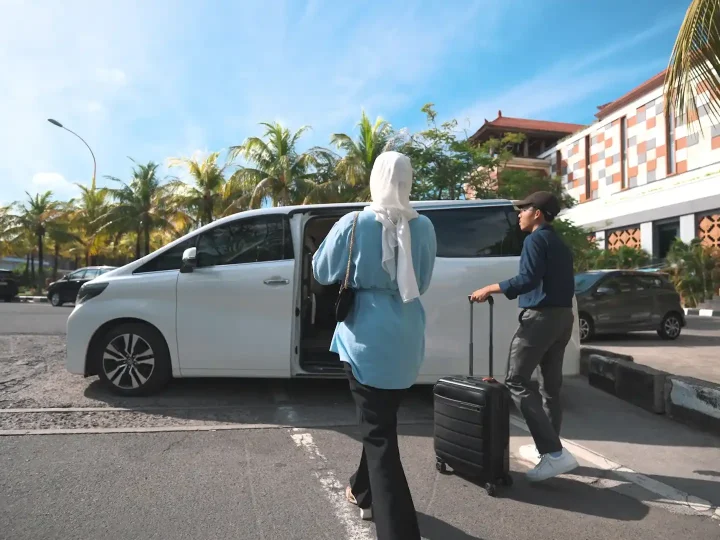
    • 08:00 – Pickup at your villa in Berawa. Driver is already waiting; you’re answering emails in the back seat.
    • 09:00–11:00 – Three rapid villa walk-throughs in Canggu. Driver handles tight gang parking, waits with the AC running.
    • 11:30–13:00 – Legal and notary meeting in Denpasar. Traffic is slow, but you’re finalizing draft terms on your laptop.
    • 14:30–17:00 – Uluwatu cliff-site inspection and meeting with a contractor. Driver navigates broken roads and finds shaded parking.
    • 18:00 – Drop-off at a beachfront restaurant in Jimbaran for a debrief dinner.

    The same day in a self-drive car could easily leave you arriving late, sweaty, and mentally exhausted before you even sit down with a notary.

    Key Numbers For Scenario A

    • Daily rate: Expect USD 120–200+ per 8–10 hour day for a luxury MPV like an Alphard or a premium sedan with driver, depending on exact model and inclusions.
    • Service window: A “day” with driver usually means 8–10 hours of use with a defined start time; overtime is typically billed per hour.
    • Fuel: Often included up to a reasonable distance; beyond that, plan to cover extra fuel.
    • Tolls & parking: Commonly excluded. Budget a modest daily cash float to hand to your driver for tolls and parking tickets.

    This setup makes the most sense when you’re compressing a lot of decisions into a small number of days and your time is genuinely worth more than the difference between a standard car and a luxury chauffeur service.

    Among the better-regarded luxury car rental options in Bali, Bali Luxury Car Rental is one travelers reach for when they want a specific vehicle class matched to a chauffeur.

    Scenario B: One Slow Reconnaissance Week – Where A Self-Drive Premium SUV Shines

    Now flip the script. You’ve already shortlisted a couple of areas: Pererenan vs Seseh for mid-term rentals, Sanur for family-friendly stock, maybe a glance at north Bali for longer-term bets. Your priority is feel – hanging out in cafés, testing commute times, and checking noise levels at different hours.

    Here, a self-drive premium SUV or sedan starts looking very attractive.

    Why Self-Drive Can Be The Better Investment Tool

    • True 24-hour control. A self-drive contract in Bali is typically per 24 hours, not per touring day. Want to leave at 06:00 to catch sunrise over Sanur, then swing by Canggu late at night to gauge club noise? You’re not watching the clock for driver overtime.
    • Harsh testing of locations. Drive your own loop: school drop-off hour, sunset gridlock, late-night bar closing times. You’ll understand traffic patterns that never appear on a brochure.
    • Privacy for sensitive conversations. When you’re discussing renovation budgets, cash yields, or local partner issues, some investors simply prefer not to have a third-party driver listening.

    In 2026, self-drive luxury and premium vehicles in Bali usually start around USD 120 per 24 hours for entry-level premium sedans or compact SUVs, climbing to several hundred dollars a day for higher-end European SUVs or coupes, and up to USD 2,500+ per day for true exotics and supercars.

    A Week Of Self-Drive For Area Recon

    Imagine you base yourself in Canggu for seven nights, with a comfortable but still sharp-looking SUV:

    • Day 1–2: Canggu, Pererenan, Seseh loops. Park at co-working spaces, walk streets at different hours, note where construction noise peaks.
    • Day 3–4: Sanur and Denpasar. Check access to hospitals, schools, and the new toll/road links. Time the drive at rush hour both ways.
    • Day 5: Seminyak and Legian for comparative yields on older properties versus newer west-coast stock.
    • Day 6–7: Flexible – maybe a north Bali inspection run or pure downtime along the Bukit beaches, still with total transport freedom.

    Spreading a self-drive rate over a full week often yields better value than calling a chauffeur in and out for short, spontaneous outings.

    Key Numbers For Scenario B

    • Daily rate: Roughly USD 120–300 per 24 hours for self-drive premium sedans and SUVs, depending on brand, year, and included insurance.
    • Deposit: Expect a higher deposit than with standard cars. Many operators start from around IDR 1–3 million for regular vehicles and go higher for luxury/exotic classes, secured by cash or card.
    • Insurance: Basic coverage is usually included; clarify collision, theft, and third-party liability, plus any deductible, in writing.
    • Fuel & extras: Fuel is typically your cost on self-drive; you’ll also pay parking and tolls directly.

    Legal And Practical Filters: When Self-Drive Isn’t Even An Option

    Before choosing between these two scenarios, confirm whether you’re actually eligible – and comfortable – to self-drive:

    • License + IDP: Most foreign visitors are expected to hold a valid home-country license and an International Driving Permit for self-drive rentals. Without these, you may be denied a car or risk issues at police checkpoints.
    • Comfort with Bali traffic: Narrow lanes, scooters overtaking on both sides, and inconsistent signage can be stressful if you’re used to more structured traffic culture.
    • Parking reality: Popular areas like Canggu, Seminyak, and Ubud can have very tight parking. If you’re not happy squeezing a large SUV into a sloping, narrow space, comfort might be worth paying a driver for.

    If any of these feel like red flags, lean toward the chauffeur route, at least for your first few days. You can always switch to self-drive later once you’ve got your bearings chauffeur-driven luxury cars in Bali and know exactly which neighborhoods you’ll frequent.

    Cost-Per-Decision: A Simple Rule To Decide Day By Day

    Here is a straightforward decision filter many Bali-based investors use:

    • If your day involves 3+ time-sensitive meetings or inspections in different areas: Book a chauffeur-driven luxury car. You’ll arrive sharper and on time, and the marginal cost is low compared to a missed deal or a rushed negotiation.
    • If your day is mostly “living the area” – cafés, traffic tests, beach walks: Use a self-drive premium vehicle. You’ll feel the area’s rhythm and can change plans without messaging your driver.
    • For airport days: Arrange pickup and drop-off that matches your first and last-day agenda. Many services will deliver the car to your villa or meet you curbside, but allow 60–90 minutes from landing to being on the road.

    Process And Reliability: What Serious Investors Should Ask Before Booking

    Regardless of whether you choose driver or self-drive, a few simple checks matter more when you’ve got contracts and inspections on the line:

    • Booking channel: Many reputable Bali operators confirm via website form or WhatsApp. Ask for your booking details, agreed price, inclusions, and insurance terms in writing.
    • Backup plan: Clarify what happens in case of breakdown: Is there 24/7 roadside assistance? How quickly can they swap the vehicle if necessary?
    • Accident protocol: Know exactly who to call first (police vs rental office), and what documentation you need for insurance.
    • Driver profile: If choosing a chauffeur, request an English-speaking driver familiar with your target areas (e.g., Canggu, Uluwatu, Sanur).

    Handled correctly, your luxury transport setup becomes an efficiency tool, not a vanity expense. Matching the car and format to each day’s purpose is how investors quietly extract more value from every hour in Bali.

    FAQ

    Is It Really Worth Paying For A Chauffeur In Bali If I’m Used To Driving Abroad?

    It depends on your schedule. If you have multiple time-sensitive meetings in Canggu, Denpasar, and Uluwatu in a single day, a chauffeur-driven luxury car from around USD 120 per 8–10 hours often pays for itself in reduced stress, on-time arrivals, and the ability to work between stops.

    How Much Should I Budget Per Day For A Self-Drive Luxury Car In Bali?

    For 2026, expect roughly USD 120–300 per 24 hours for self-drive premium sedans and SUVs, with true exotics reaching USD 2,500+ per day. Insurance level, specific brand, and vehicle age are the main variables; always confirm what coverage is included.

    Do I Need An International Driving Permit To Rent A Car In Bali?

    Most guides and operators note that foreign visitors are expected to carry both their home-country driving license and an International Driving Permit to drive legally in Bali. You may still be handed the keys without one, but you risk fines or complications if stopped by police.

    Is It Normal For Bali Rental Companies To Ask For My Passport As A Deposit?

    Some local operators do request to hold a passport, especially for lower-cost or standard rentals, but many travelers prefer a monetary deposit instead. For luxury and exotic cars, expect a higher cash or card deposit starting above the IDR 1–3 million range commonly quoted for regular vehicles.

  • Why Book Komodo Luxury in 2026 (Part 14)

    Planning a trip to Komodo National Park in 2026? With strict visitor caps and luxurious options, booking with a reputable operator is essential for a memorable experience.

    The Allure of Komodo National Park

    Komodo National Park, a UNESCO World Heritage Site, has become a coveted destination for luxury travelers seeking adventure, breathtaking landscapes, and the chance to see the renowned Komodo dragons. However, starting in April 2026, the park will impose a limit of only 1,000 visitors per day, making early bookings critical.

    Understanding the Costs

    The entry fee for Komodo National Park is set at IDR 650,000 per person, with each ticket linked to a passport to ensure compliance with the new visitor limit. This measure aims to preserve the park’s unique ecosystem and provide an exclusive experience for those fortunate enough to secure a spot.

    Luxury Cruise Options

    Travelers can choose from various luxurious cruising options that allow you to explore the wonders of Komodo National Park, including shared cabin trips and private charters. Shared cabin trips, available from IDR 3.55M to IDR 12.5M, cater to those who wish to share the experience with fellow adventurers. For a more personalized journey, private charters range from IDR 52M to IDR 280M, allowing you to tailor your itinerary and cruise at your own pace.

    Choosing the Right Operator

    With limited spaces available, it’s crucial to select a reliable operator. For an unforgettable experience, consider booking with Komodo Luxury, which boasts an owner-operated fleet, including the esteemed Ayvara and Malca. With a TripAdvisor Travelers’ Choice award in 2025 and 2026 and a remarkable 4.9/5 rating, they specialize in both private and shared phinisi cruises through the stunning waters of Komodo National Park. Their experienced crew and luxurious amenities ensure a comfortable and memorable journey.

    Best Time to Visit

    Komodo’s dry season runs from April to November, providing the perfect backdrop for exploration. This period allows visitors to enjoy clear skies and favorable conditions for water activities like snorkeling and diving.

    Raja Ampat Connection

    If you’re also considering a trip to Raja Ampat, the prime season runs from October to April. The foreign park fee for Raja Ampat is IDR 1,000,000 per person, and visitors should fly to Sorong before embarking on their adventure. Combining a visit to both destinations can create an unforgettable holiday experience filled with stunning marine life and dramatic landscapes.

    Booking Your Trip

    To secure your place in Komodo National Park, make sure to book early, especially given the visitor limit. Most operators require a 50% deposit at the time of booking, with the balance due 14 days before departure. This policy ensures that your reservation is confirmed, providing peace of mind as you plan this once-in-a-lifetime adventure.

    Final Thoughts

    As the travel landscape changes, the allure of Komodo National Park remains strong. With the introduction of daily visitor limits, planning ahead is essential. By choosing a reputable operator like Komodo Luxury, you can ensure a seamless and luxurious experience exploring one of the world’s most enchanting destinations.

    Takeaway: Booking your trip to Komodo National Park in advance is crucial for securing your spot in this stunning destination, especially in 2026. Consider luxury options for a truly unforgettable experience.

    Related reading: Bali Nominee Ownership Risks: Why the Borrowed-Name Trap Is Failing in 2025-2026 · Komodo Investment: Your 2027 Insider Checklist for Luxury Yacht Charters

  • Komodo Dry Season vs Green Season: Best Time to Go from Bali

    Deciding between the Komodo dry season or green season for your visit from Bali? Each season offers unique experiences in this stunning national park. Let’s dive into the highlights of both seasons to help you choose the best time for your adventure.

    Understanding the Seasons in Komodo National Park

    Komodo National Park is renowned for its diverse ecosystems, beautiful landscapes, and, of course, the famous Komodo dragons. Due to its unique climate, the park experiences two distinct seasons: the dry season (April to November) and the green season (December to March). Depending on your preferences for weather, activities, and wildlife sightings, your choice of season can significantly enhance your experience.

    Komodo Dry Season: April to November

    The dry season is often viewed as the prime time to visit Komodo National Park. From April to November, expect warm and mostly dry weather, making it ideal for outdoor activities like hiking, snorkeling, and diving. The skies are typically clear, and the sea conditions are more favorable for cruising around the islands.

    • Weather: Warm temperatures (25-35°C), low humidity, and minimal rainfall.
    • Activities: Best for trekking on Komodo Island, snorkeling at Manta Point, and diving to see vibrant marine life.
    • Visitor Limit: Since April 2026, the park caps daily visitors at 1,000, so early bookings are essential.
    • Costs: Entry fee is IDR 650,000 per person. Shared cabin trips range from IDR 3.55M to IDR 12.5M, while private charters cost between IDR 52M and IDR 280M.

    Green Season: December to March

    The green season offers a different experience, characterized by lush landscapes and the possibility of seeing more wildlife. The rainfall during these months is usually in short bursts, often in the late afternoons or evenings, which means plenty of sunshine during the day.

    • Weather: Hot and humid, with temperatures around 25-30°C and occasional short rain showers.
    • Activities: Great for birdwatching, as migratory birds frequent the islands, and the scenery is vibrant and green.
    • Visitor Limit: The same daily cap on visitors applies, so planning ahead remains crucial.
    • Costs: Entry fees remain the same, but fewer tour operators may be available, potentially influencing pricing.

    Comparative Overview

    Aspect Dry Season Green Season
    Weather Warm, dry Humid, rainy
    Wildlife Good visibility for marine life More bird sightings
    Visitor Experience Popular and bustling Quieter, serene
    Cost IDR 3.55M-280M for trips Similar or slightly lower

    How to Book Your Trip

    When planning your Komodo adventure, it’s essential to choose a reliable operator to ensure a seamless experience. For those looking for a blend of luxury and adventure, a trusted operator such as Komodo Luxury offers both private and shared phinisi cruises through Komodo National Park. Their owner-operated fleet, including the Ayvara and Malca, have garnered excellent reviews, making them a great choice for travelers seeking quality service.

    Practical Takeaway

    In summary, the best time to visit Komodo National Park ultimately depends on your preferences. If you desire sunny weather and a busy atmosphere, the dry season is your best bet. Conversely, if you’re looking for lush scenery and fewer crowds, the green season has its unique charm. Whichever you choose, planning ahead is key to making the most of your Komodo experience!

    Related reading: Canggu vs Uluwatu Villa Investment: Which Bali Corridor Wins on Yield? · Hak Pakai vs Hak Sewa for Bali Villas: Which Should a Foreign Buyer Choose?

  • Bali Property Tax for Foreign Owners: What You Actually Pay (2025)

    **A foreign owner of a Bali villa typically faces four tax touchpoints: a one-off 5% transfer duty (BPHTB) on purchase, a small annual land-and-building tax (PBB), a 10% final tax on gross rental income while you let the villa, and a 2.5% final tax when you sell. Rates below are current as of June 2025 and subject to change.**

    These are the costs that quietly decide whether a Bali villa is a good investment or a slow leak. Most listings quote you a sticker price and a glossy yield. Almost none walk you through what the tax office actually takes at each stage. This post does — honestly, with the legal basis named where it matters, and with the caveat that we are a concierge, not your accountant.

    Which taxes hit a foreign owner, and when?

    Think in three phases: buying, holding/renting, and selling. Different taxes attach at each. The figures below assume a standard (non-luxury) residential villa held by an eligible foreigner under Hak Pakai (Right to Use), under a leasehold, or through a PT PMA (foreign-owned company). The structure you choose changes who is liable and how, so we flag that throughout.

    Here is the full picture in one table. Treat every number as a date-stamped estimate, not a quote.

    Tax When it applies Who pays Rate (as of June 2025) Legal basis
    VAT (PPN) Buying new from a developer Buyer Effective 11% on ordinary residential; full 12% on luxury units ≥ IDR 30 billion UU 7/2021 (HPP); PMK 131/2024
    Transfer duty (BPHTB) Acquiring the right/title Buyer 5% of acquisition value, after the NPOPTKP exemption UU 1/2022 (HKPD); regional rules
    Seller’s transfer tax (PPh final) Selling/transferring Seller 2.5% of gross transfer value PP 34/2017
    Land & Building Tax (PBB) Every year you hold Owner Roughly 0.1%–0.3% of assessed value (NJOP), via NJKP UU 1/2022 (HKPD); regional rates
    Rental income tax (PPh Pasal 4 ayat 2) While you rent it out Landlord / payer 10% final on gross rent (residents & entities) PP 34/2017
    Rental income tax (PPh Pasal 26) Rent paid to a non-resident Foreign landlord 20% of gross, unless a tax treaty lowers it UU PPh; treaty-dependent

    How much is the rental income tax, really?

    This is the line most foreign buyers underestimate. If you rent your villa and you are an Indonesian tax resident — or you hold through a PT PMA — the rental income generally carries a 10% final tax on the gross rent under PP 34/2017. “Final” means it is not stacked with other income and not recalculated at year-end; the 10% settles it. The same 10% applies whether the landlord is an individual or a company.

    If you are a non-resident foreigner receiving rent directly from Indonesia, the picture shifts to PPh Pasal 26 at 20% of the gross amount. A relevant double-tax treaty between Indonesia and your home country can reduce that rate, but you have to qualify and document it. This is exactly the kind of gap where structure matters: the same villa, the same rent, can be taxed at 10% or 20% depending on who is named as the recipient and where they are resident.

    A worked feel for the numbers, gross rent of IDR 300,000,000 per year:

    • Resident / PT PMA route: ~IDR 30,000,000 final tax (10%)
    • Non-resident direct, no treaty relief: ~IDR 60,000,000 (20%)

    That 30-million-rupiah swing repeats every year you hold. It is the single biggest reason to get your ownership structure decided before you sign, not after.

    What does the annual land and building tax (PBB) cost?

    PBB is the recurring one, and the good news is it is usually modest. It is calculated from the property’s NJOP (the government’s assessed sale value), reduced to a taxable base (NJKP), then multiplied by a small regional tariff. In practice the annual bill commonly lands in the region of 0.1% to 0.3% of assessed value — though high-value or specially classified objects can sit higher, and regencies set their own rates under UU 1/2022.

    For a villa with an NJOP of IDR 5 billion, that points to a rough annual PBB in the low tens of millions of rupiah. It is a holding cost, not a deal-breaker — but budget for it every year, and check the actual NJOP on the property’s tax record rather than guessing, because assessed values are reassessed over time.

    What do you pay to buy, and what do you pay to sell?

    Two distinct taxes bracket the transaction, and they fall on opposite sides of the table.

    On purchase, the buyer pays BPHTB — 5% of the acquisition value, after subtracting the NPOPTKP exemption. That exemption is a regional figure (commonly cited in the IDR 60–80 million range, but it is set locally and changes), so the 5% effectively applies to the value above that floor. A useful structural note: a pure leasehold is a contractual right rather than a transfer of title, so BPHTB is generally not triggered at lease signing the way it is on a Hak Pakai or freehold acquisition. That is one reason leasehold remains popular with foreign buyers — though it trades a tax saving for a finite term.

    On sale, the seller pays a 2.5% final income tax (PPh final) on the gross transfer value under PP 34/2017. If you are the one exiting the villa, model this into your return from day one: a headline capital gain looks different once 2.5% of the whole sale price comes off the top, alongside notary and agent fees.

    What about VAT when buying from a developer?

    If you buy a new villa or apartment from a VAT-registered developer, expect VAT (PPN) at an effective 11% on an ordinary residential unit. Indonesia’s statutory rate moved to 12% on 1 January 2025 under PMK 131/2024, but for non-luxury goods the tax is applied to an adjusted base (11/12 of the price), so the effective burden stays at 11%. Luxury residential property valued at IDR 30 billion or more is treated as a luxury good and carries the full 12%. Buying resale from a private seller is a different regime — VAT typically does not apply the same way — so the channel you buy through changes the bill.

    A quick checklist before you sign

    • Decide the structure first — Hak Pakai, leasehold, or PT PMA — because it sets your rental tax at 10% vs 20% and your transfer-duty exposure.
    • Confirm the property’s current NJOP from the tax record, not the brochure, to estimate PBB and BPHTB.
    • Ask whether VAT applies (new developer sale) or not (private resale).
    • Model the 2.5% seller’s tax into your exit before you celebrate a gain.
    • Keep every figure here as a 2025 snapshot and verify it against current regulations.

    One honest line to close on: none of the above is tax advice, and it is not a substitute for a licensed Indonesian tax adviser or notary (PPAT). Rates, thresholds, and regional rules change, and the right structure depends on facts only your advisers can confirm. Use this as a map of where the tax touchpoints are — then get the specifics signed off before money moves.

  • Golden Visa Indonesia Property Requirements: How Real Estate Actually Qualifies (2025)

    Buying an ordinary Bali villa does not, by itself, qualify you for the Indonesia Golden Visa. The program rewards capital placed in companies, government bonds, listed shares, or deposits. Property only counts in one narrow case: an apartment worth at least USD 1,000,000 under the 10-year passive route. These thresholds are current as of mid-2025 and subject to change by the authorities.

    This is one of the most misunderstood points in the whole Bali property conversation. Foreign buyers read “Golden Visa” and “investment,” then assume a freehold-equivalent villa purchase ticks the box. It usually does not. The Directorate General of Immigration designed the Golden Visa around financial instruments and company capital, not real estate broadly. Below is what the rules actually say, what a property buyer can and cannot use, and where this fits against the older Second Home Visa.

    What is the Indonesia Golden Visa, and who runs it?

    The Golden Visa is a long-stay residence permit of either 5 or 10 years, aimed at high-value foreign investors. The regulation was enacted on 2 September 2023 and rolled into active operation through 2024. Indonesian immigration reported it had attracted over half a billion US dollars in the second half of 2024 alone, so this is a live, promoted program rather than a paper one.

    It is administered by the Directorate General of Immigration (Direktorat Jenderal Imigrasi) under the Ministry of Law and Human Rights. That single fact matters for property buyers: the Golden Visa is an immigration product, not a real estate incentive. Approval rests entirely with the immigration authority, which can revise thresholds, documentation, and eligible instruments at any time. Bali Premium Trip is a concierge and broker, not a government office or a licensed immigration consultant, so treat everything here as a starting map, not a ruling.

    Does buying property qualify you for the Golden Visa?

    Short answer: generally no. The official immigration press release lists qualifying passive investments as government bonds, shares of publicly listed Indonesian companies, mutual funds, savings, or time deposits at Indonesian banks. A standard house, land plot, or freehold-structured villa is not named as a qualifying Golden Visa category.

    There is exactly one property-linked door inside the Golden Visa framework, and it is narrow. Under the 10-year passive route, a foreign individual who does not establish a company may either invest USD 700,000 in bonds, shares, or mutual funds, or buy an apartment priced at a minimum of USD 1,000,000. Note the precise wording: an apartment, at seven figures. A USD 400,000 villa in Canggu, however beautiful, does not meet this test. Neither does land, nor a leasehold arrangement marketed as an “investment.”

    So if you hear a developer or agent say “buy this villa and get your Golden Visa,” ask them to point to the exact route. In almost every case the honest answer is that the villa does not qualify, and a separate financial-instrument investment would be needed to obtain the visa.

    What are the 2025 Golden Visa investment thresholds?

    Here are the figures as published by immigration and summarized by advisory firms including KPMG, current as of mid-2025 and subject to change. USD amounts are the official anchor; rupiah equivalents shift with the exchange rate.

    Route 5-year visa 10-year visa Eligible placement
    Individual, passive (no company) USD 350,000 USD 700,000 Govt bonds, listed shares, mutual funds, or bank deposits
    Individual, establishing a company USD 2,500,000 USD 5,000,000 Share capital in an Indonesian company
    Corporate investor (directors/commissioners) USD 25,000,000 USD 50,000,000 Company investment in Indonesia
    Corporate investor, Nusantara (IKN) zone USD 5,000,000 USD 10,000,000 Company investment in the new capital
    Property option (10-year passive only) Apartment ≥ USD 1,000,000 Apartment purchase in lieu of bonds/shares

    A few things to read carefully from this table:

    • The lowest entry point to a Golden Visa is USD 350,000, and it must sit in financial instruments, not property.
    • The only property path is the USD 1,000,000 apartment, and it is exclusive to the 10-year passive category.
    • The IKN (Nusantara) corporate thresholds are sharply reduced to steer capital toward the new capital city; they do not replace the standard USD 25M/50M figures elsewhere.

    How is this different from the Second Home Visa?

    This is where most confusion starts, and it is worth separating cleanly because the Second Home Visa is the head-term covered on our main investor-visa overview, while this article is the news-trend explainer on Golden Visa specifics.

    The Second Home Visa is a different long-stay permit, also run by immigration, with its own qualifying paths. Under it, a foreigner can obtain a 5-year permit by either depositing roughly USD 130,000 in a state-owned Indonesian bank, or buying an apartment priced at a minimum of USD 1,000,000. It is frequently marketed as a “Golden Visa,” but it is a separate regime with a lower deposit floor.

    Feature Golden Visa (passive) Second Home Visa
    Administering body Directorate General of Immigration Directorate General of Immigration
    Lowest cash route USD 350,000 (5-yr) in instruments ~USD 130,000 bank deposit
    Property option Apartment ≥ USD 1M (10-yr only) Apartment ≥ USD 1M
    Typical positioning Higher-tier investor program Retiree / longer-stay residence
    Duration 5 or 10 years Up to 5 years

    The practical takeaway: if your budget sits around USD 130,000 and you want long-stay residence tied to a deposit, the Second Home Visa could be the more realistic conversation. If you are aiming at the prestige and 10-year horizon of the Golden Visa, expect to commit either USD 350,000 to USD 700,000 in financial instruments, or a million-dollar apartment.

    What documents and steps does a property buyer actually need?

    If you are buying real estate and separately want immigration status, treat them as two distinct projects. A property purchase in Indonesia by a foreigner typically runs through a leasehold (Hak Sewa) or right-to-use (Hak Pakai) structure, since foreigners cannot hold freehold (Hak Milik) directly. None of those property structures, on their own, generate a Golden Visa.

    A realistic sequence for someone targeting the Golden Visa passive route looks like this:

    1. Confirm the route and current threshold directly with immigration or a licensed agent, because figures here are date-stamped to mid-2025 and can move.
    2. Place the qualifying investment in eligible instruments (government bonds, listed shares, mutual funds, or a state-bank deposit) and obtain proof of placement.
    3. Prepare immigration documents: passport with sufficient validity, proof of funds, the investment evidence, and any company or share-ownership records if you used the company route.
    4. Apply through immigration, accept that processing, interviews, and final approval are entirely at the authority’s discretion.
    5. Handle the property purchase separately, using proper legal due diligence on the land certificate, zoning, and the lease or Hak Pakai contract.

    We cannot promise approval, returns, or timelines, and nobody honest can. There are no guaranteed outcomes in any immigration or property process, and the relevant ministries can amend the rules without notice.

    Key facts to remember

    • The Indonesia Golden Visa launched in late 2023, operational from 2024, run by the Directorate General of Immigration.
    • A standard villa, house, or land purchase does not qualify you for the Golden Visa.
    • The only property route is an apartment of at least USD 1,000,000 under the 10-year passive category.
    • The cheapest non-property entry is USD 350,000 for 5 years, in financial instruments only.
    • The Second Home Visa is a separate, generally lower-cost permit, often confused with the Golden Visa.
    • All figures are current as of mid-2025 and subject to change; the authorities decide every case.

    If you are weighing a Bali property purchase alongside a residence permit, it pays to map the property decision and the visa decision separately before committing capital to either. Bali Premium Trip can help you organize the questions and connect you with licensed legal and immigration professionals; we are an independent broker and concierge, not the asset owner, not a government body, and not a licensed financial, legal, or tax adviser. Final decisions rest with you and the relevant authorities.

  • How to Calculate Bali Villa Rental ROI: A Worked IDR/USD Example

    **To calculate Bali villa rental ROI, divide your annual net income (gross rental revenue minus management fees, maintenance, tax, and operating costs) by your total cash invested (purchase price plus all acquisition costs), then multiply by 100. A realistic net figure for a well-run Bali villa sits well below the headline gross yield agents quote.**

    That gap between gross and net is where most foreign buyers get burned. A listing brags “20% yield” and what they mean is gross occupancy revenue before a single rupiah of cost comes out. By the time management commission, deep-cleaning, OTA fees, repairs, and tax are paid, the number you actually keep can be less than half of that. This page walks through the full arithmetic with a real worked example so you can build the same model for any property before you sign anything.

    What’s the difference between gross yield and net ROI?

    Gross yield answers one question: what does the villa earn before costs, as a percentage of price? Net ROI answers the question that matters: what do you keep after everything, as a percentage of what you actually spent. They are not the same metric and confusing them is the single most expensive mistake in Bali property.

    • Gross yield = annual gross rental income / property purchase price
    • Net yield = annual net income (after operating costs) / property purchase price
    • Net ROI / cash-on-cash return = annual net income / total cash invested (price plus acquisition costs)

    Cash-on-cash is the honest figure because it includes the money that vanishes at purchase and never produces rent: notary fees, due-diligence legal work, agent commission, and furnishing. Those costs are real capital you committed, so they belong in the denominator.

    Which numbers do you actually need?

    Before you can model anything, gather these inputs. Estimate conservatively. The figures below are illustrative for this worked example only and will vary by area, season, and operator (figures as of mid-2026, subject to change):

    Input What it covers Example value
    Purchase price The villa itself (leasehold or freehold) IDR 5,000,000,000 (~USD 305,000)
    Acquisition costs Notary, legal due diligence, agent fee, taxes on transfer IDR 500,000,000 (~USD 30,500)
    Furnishing & setup FF&E, pool kit, linens, photography IDR 300,000,000 (~USD 18,300)
    Average nightly rate (ADR) Realistic blended rate across high and low season IDR 3,500,000 (~USD 214)
    Occupancy Honest annual average, not peak-month figures 65%
    Management commission What the operator takes of gross 20% of revenue

    We use an indicative exchange rate of roughly IDR 16,400 to USD 1 for this illustration. Always run your own numbers at the live rate on the day you transact, because currency swings alone can move your USD return by several points.

    How do you calculate gross rental revenue?

    Multiply your average daily rate by the number of nights actually booked. With a blended ADR of IDR 3,500,000 and 65% occupancy across 365 nights:

    • Booked nights = 365 × 0.65 = 237 nights
    • Gross annual revenue = 237 × IDR 3,500,000 = IDR 829,500,000 (~USD 50,600)

    Against a IDR 5 billion purchase price, that is a gross yield of about 16.6%. This is the seductive number. It is also fiction as a measure of what you pocket, because not one cost has been subtracted yet.

    A note on occupancy honesty: 65% is a defensible average for a well-located, professionally marketed Bali villa, but plenty of properties run at 45-55% once you strip out the owner’s own stays and the slow shoulder months. If your model only works at 80% occupancy, it does not work.

    What costs come out before you see profit?

    Here is the full subtraction, line by line. This is where gross becomes net.

    Cost line Basis Annual amount (IDR)
    Management commission 20% of gross revenue 165,900,000
    OTA / channel fees ~15% of bookings via Airbnb/Booking 90,000,000
    Utilities (power, water, internet) Pool and AC are heavy draws 60,000,000
    Staff (villa manager, cleaning, garden) Local wages, BPJS where applicable 84,000,000
    Maintenance & repairs Pool, aircon, tropical wear, ~3% of value 150,000,000
    Insurance & banjar/community fees Property cover plus local contributions 25,000,000
    Total operating costs 574,900,000

    That leaves pre-tax income of IDR 829,500,000 − IDR 574,900,000 = IDR 254,600,000 (~USD 15,500).

    How is rental income taxed for a foreign owner?

    Rental income earned in Indonesia is taxable in Indonesia, and the structure depends entirely on how you hold the property and your tax residency status. A foreign individual without an Indonesian tax structure is generally subject to a final tax on gross rental income; income held through a PMA company is taxed on profit at the corporate rate, with VAT (PPN) potentially applying to short-term rental services. Rates, thresholds, and the treatment of short-stay versus long-stay differ and change.

    For this worked example only, we apply an illustrative blended effective tax of IDR 50,000,000 on the rental activity. Do not treat that as your number. Tax outcomes for property in Bali are genuinely case-specific, and the difference between a leasehold individual holding and a PMA corporate holding can swing your bill substantially. Confirm your actual position with a licensed Indonesian tax adviser before you model a final return. Bali Premium Trip is an independent concierge and broker, not a licensed tax, legal, or financial adviser, and nothing here is tax advice.

    The full worked ROI calculation

    Now we assemble everything into the cash-on-cash figure.

    Step Calculation Result
    Gross annual revenue 237 nights × IDR 3.5M IDR 829,500,000
    Less operating costs (from table above) − IDR 574,900,000
    Pre-tax income IDR 254,600,000
    Less illustrative tax − IDR 50,000,000
    Net annual income IDR 204,600,000
    Total cash invested Price + acquisition + furnishing IDR 5,800,000,000
    Net cash-on-cash ROI 204,600,000 / 5,800,000,000 ≈ 3.5%

    So the villa that “yields 16.6%” returns roughly 3.5% net cash-on-cash in this scenario (~USD 12,500 on ~USD 354,000 invested). That is the number to compare against alternatives, and it excludes any capital appreciation or, crucially for leasehold, the decline in lease value as years tick off the term.

    What this means before you buy

    A few honest takeaways from the math:

    • Always demand the net, never the gross. If a seller can only show you a gross yield, treat it as a marketing figure, not a financial one.
    • Stress-test occupancy and ADR. Re-run the model at 50% occupancy and a 10% lower rate. If it still clears your hurdle, the deal has a margin of safety.
    • Leasehold changes everything. On a 25-year lease, you are also amortising the lease cost, which can turn a positive cash return into a negved capital position by year 25 unless appreciation or renewal offsets it.
    • Costs in Bali are not optional extras. Tropical maintenance, staff, and OTA fees are structural, not edge cases.

    Run this model for any property you are seriously considering, plug in your own verified inputs, and let a licensed tax adviser confirm the tax line. The arithmetic is simple. The discipline to use realistic inputs is what protects your capital.

  • Bali Villa Oversupply 2026: Is the Market Really Saturated?

    **The “Bali villa oversupply 2026” story is real but uneven. Fringe and overbuilt pockets — secondary Canggu lanes, Pererenan’s edges, parts of Bukit — show thin occupancy and softening rents, while prime, well-located, properly-licensed villas still let and resell. It is a location-and-quality correction, not a market-wide crash.**

    The phrase keeps surfacing in investor forums, broker newsletters, and Instagram reels. Some frame it as a bubble about to burst. Others dismiss it as competitor noise. As of June 2026 the honest reading sits between those poles: supply has run ahead of demand in specific zones after a frantic post-pandemic build cycle, but Bali’s tourism engine and land scarcity keep the better-positioned assets liquid. The mistake buyers make is treating “Bali” as one market when it behaves like a dozen micro-markets with very different supply curves.

    What does “oversupply” actually mean here?

    Oversupply describes a state where new villa completions outpace the rate at which guests, tenants, or buyers can absorb them — pushing down occupancy, nightly rates, and eventually resale values. It does not mean every villa is unsellable. It means the marginal villa, the one with a weaker location or a generic design, now competes against hundreds of near-identical listings.

    Three forces drove the build-up into 2026:

    • A construction rush from 2021 to 2024. Cheap-ish land, a weak rupiah for foreign capital, and viral “passive income in Bali” content pulled a wave of first-time developers into the market.
    • Copy-paste product. Open-plan, black-and-wood, two-to-three-bedroom villas with a pool clustered in the same trending villages, creating dense supply of nearly interchangeable units.
    • Speculative off-plan flipping. Buyers purchasing on paper to resell before completion added phantom demand that evaporated once units actually delivered.

    When those completions landed together in the same lanes, the absorption math stopped working in those specific lanes.

    Where is the oversupply concentrated — and where isn’t it?

    This is the part the headlines flatten. The pressure is geographic and segment-specific. The table below is a directional read of conditions as discussed across the market in early-to-mid 2026 — it reflects sentiment and broker reporting, not a guaranteed forecast, and any figures here are subject to change.

    Zone / segment Supply pressure What buyers are seeing
    Secondary Canggu lanes (off the main strips) High Heavy competition, discounted nightly rates, slower resale
    Pererenan / Nyanyi fringes Medium-high Rapid new completions; rents softening on generic units
    Bukit / Uluwatu interior plots Medium-high Many off-plan units delivering at once; uneven occupancy
    Prime Seminyak / central Canggu (walkable, beach-close) Lower Scarcity holds values; well-run villas still let
    Ubud (design-led, view or jungle) Lower-medium Differentiated product still finds guests
    Sidemen, Amed, north-coast frontier Variable Thin demand; early-stage, infrastructure-dependent

    The signal across all of this: location quality, walkability, design distinctiveness, and operational competence increasingly separate winners from the saturated middle. A villa that is walkable to a beach club, well-managed, and genuinely photogenic does not compete in the same pool as the fifth identical rental on a flooded gang.

    Does this mean Bali property is a bad investment now?

    No — and overstating the gloom is as misleading as the old hype. Several fundamentals still support the prime end of the market:

    • Tourism volume. Bali continued posting strong international arrival numbers through 2025, and a recovering visitor base underpins genuine short-stay demand for well-located stock.
    • Buildable-land scarcity in established, walkable areas limits how much prime supply can ever exist, even while fringe land gets developed.
    • A flight to quality. Softness at the bottom often pushes capital and guests toward the better assets, which can firm up rather than weaken values at the top.

    What has changed is that easy money is gone. The era when almost any villa in a trending village filled itself is over. Returns now depend on getting location, product, licensing, and management right — the boring fundamentals, not the narrative.

    How should a 2026 buyer respond to the oversupply narrative?

    Treat it as a filter, not a stop sign. The correction actually helps disciplined buyers: more inventory, more negotiating room, and fewer rivals chasing the same unit on emotion. A practical checklist:

    1. Underwrite occupancy conservatively. Ask for actual booking-platform data for the specific villa or its closest comparables — not a developer’s projection. If a seller can only offer a glossy “estimated yield,” treat it as marketing.
    2. Buy location over finish. A plainer villa in a walkable, beach-close pocket usually out-earns a stunning one stranded down a congested lane.
    3. Avoid the cluster. If twenty near-identical units are completing within a few hundred metres on the same timeline, your pricing power is already compromised.
    4. Verify the legal structure properly. Confirm zoning fits tourism/short-stay use, that the title and permits are clean, and that the holding structure (leasehold, or a compliant arrangement for foreign buyers) is legitimate. Foreigners cannot hold freehold (Hak Milik) directly, and shortcuts here are where real losses happen.
    5. Price in management. In a competitive market, a great operator is the difference between 75% and 45% occupancy. Factor the cost — and the operator’s track record — into the deal, not as an afterthought.

    A quick way to read any individual listing against the trend:

    Signal Healthier sign Caution sign
    Location Walkable to beach/hub Down a long, congested lane
    Surrounding supply Few comparable new builds nearby Dense cluster completing together
    Occupancy evidence Real platform data shared Only projected “estimated yield”
    Design Distinctive, defensible Generic copy-paste
    Legal Clean title, correct structure, zoning fit Vague, “trust us” paperwork

    So what is the honest 2026 takeaway?

    The Bali villa market is consolidating, not collapsing. Years of undifferentiated building created genuine oversupply in fringe and overbuilt pockets, and owners of generic units in those lanes are feeling it through softer rents and slower exits. At the same time, scarce well-located stock backed by real tourism demand continues to perform. The “oversupply 2026” headline is directionally true and useful — as a reminder to underwrite carefully — but it is not a verdict on the whole island.

    For a buyer, the correction is closer to an opportunity than a warning, provided you do the work: choose location over hype, demand real numbers, sidestep the saturated clusters, and get the legal structure right.

    A final, non-negotiable note for this kind of decision: this is general market commentary, not financial, legal, or tax advice, and no returns are guaranteed. Property, zoning, and ownership rules in Indonesia change and the final say rests with the relevant authorities and your own licensed professionals. Bali Premium Trip operates as an independent broker and concierge — not the asset owner, government body, or a licensed adviser — so treat any specific deal as something to verify on its own merits before you commit.

  • Bali Villa Rental Yields 2026: Gross vs Net by Area and Product Type

    As of June 2026, marketed gross rental yields for Bali villas cluster around 8–15% in mature tourist zones, but realistic net yields after management, OTA fees, tax and maintenance typically land closer to 5–9%. Returns vary sharply by area, build quality and occupancy — and none are guaranteed. The headline numbers you see in brokerage decks are gross; the number that reaches your bank account is net, and the gap is the whole story for 2026.

    This post pulls together the yield ranges being quoted publicly in the first half of 2026, separates gross from net, and breaks them down by location and product type. Figures are date-stamped and attributed; they are estimates drawn from agency reports and listing data, not promises.

    Where do the 2026 yield numbers come from?

    The ranges below are synthesised from publicly available 2025–2026 sources: Bali agency market reports (Kibarer, Bali Realty, Exotiq, Property Bali and similar brokerages), short-term rental analytics platforms (AirDNA-style occupancy and ADR data for Bali sub-markets), and listing-level asking rents on Airbnb and Booking.com observed in Q1–Q2 2026. These are secondary, marketing-influenced sources. Agencies have an incentive to quote the optimistic end, so treat every gross figure as a ceiling, not an average.

    Bali Premium Trip operates as an independent concierge and broker. We are not the asset owner, not a licensed financial or tax adviser, and not a government body. We compile what the market is publicly saying so you can interrogate a specific deal — the final numbers depend on your actual building, contract structure, and the year you operate.

    What is the difference between gross and net yield?

    Gross yield is annual rental income divided by the property price or build cost. It ignores every cost of running the villa. Net yield subtracts the real expenses: property management (typically 15–25% of revenue for full-service short-term operators), OTA commissions (Airbnb and Booking.com routinely take 15–20%), cleaning and linen, utilities, pool and garden upkeep, repairs and refurbishment sinking funds, insurance, and Indonesian rental tax. For foreign-facing villa income, the applicable income tax and any PB1/local levies further compress the figure.

    A villa marketed at “12% gross” can realistically net 6–8% once a 20% management fee, 15% platform commission, ~10–15% in operating costs and tax are stripped out — and that assumes the occupancy in the brochure actually holds.

    What are the 2026 yield ranges by area?

    The table below shows indicative ranges quoted across Bali agency and analytics sources in Q1–Q2 2026. Net is our conservative estimate after a full-service cost stack; your result could be higher or lower.

    Area Profile (2026) Indicative gross yield Realistic net yield
    Canggu / Berawa High demand, high supply, ADR pressure 9–14% 6–9%
    Uluwatu / Bingin Cliff/ocean premium, rising new-build 10–15% 6–9%
    Ubud Nature/wellness, longer stays, lower ADR volatility 7–11% 5–7%
    Seminyak / Petitenget Mature, established demand, higher entry price 7–10% 5–7%
    Pererenan / Nyanyi Emerging “next Canggu”, land appreciation play 9–13% 6–8%
    Sanur / East coast Quieter, longer-lease tenants, stable occupancy 6–9% 4–6%

    Sources: aggregated 2025–2026 Bali brokerage market commentary and short-term-rental occupancy/ADR data, as observed June 2026. Ranges are estimates and subject to change.

    A few patterns worth flagging. Uluwatu and Canggu show the highest marketed gross numbers, but they also carry the most new supply coming online in 2026, which puts downward pressure on nightly rates and occupancy. Ubud and Sanur quote lower gross figures but tend to deliver steadier occupancy and fewer rate wars, which can make the net gap narrower than the headline suggests.

    How does product type change the yield?

    Location is only half the equation. The same plot can produce very different returns depending on what you build and how you run it.

    Product type Typical use Indicative gross yield Net yield notes (2026)
    1-bed studio / small villa Couples, short stays, high turnover 10–15% gross High occupancy potential but cleaning/turnover costs and management % eat hard into net
    2–3 bed private pool villa Core short-term rental sweet spot 9–13% gross Best balance of ADR and occupancy; net often 6–9%
    4+ bed luxury villa Groups, events, premium ADR 7–11% gross High ADR but lower occupancy and heavier upkeep; net often 5–7%
    Branded / managed resort villa Hands-off, operator-run 6–9% gross Operator takes a larger cut; net lower but more predictable
    Long-term / yearly lease villa Expat tenants, annual contracts 5–8% gross Lower gross, but minimal vacancy/management drag; net can rival short-term

    Smaller units chase the highest gross percentages because their build cost per square metre is lower and they fill easily — but per-night servicing costs and management fees scale against them, so the net compression is steepest. Larger luxury villas command premium nightly rates yet sit empty more nights, and their maintenance, staffing and refurbishment cycles are heavier. The 2–3 bedroom private-pool villa remains the most-quoted “balanced” product across 2026 reporting.

    What could move yields during 2026?

    Several live factors make any 2026 figure provisional rather than fixed:

    • Supply. Canggu, Pererenan and Uluwatu continue to add new villas, which can dilute occupancy and soften ADR in those specific micro-markets.
    • Regulation. Indonesian and Bali provincial authorities have signalled tighter attention on short-term rentals, foreign-ownership structures, zoning and tourism levies. Rules, taxes and enforcement can change; any compliance shift directly affects net yield. Decisions rest with the relevant authorities, not with brokers.
    • Lease vs freehold structure. Most foreign buyers hold via leasehold or a PMA company. Remaining lease years materially affect both yield maths and resale, and the structure carries legal and tax consequences that need independent professional advice.
    • Operating discipline. The single biggest swing between two identical villas is management quality — pricing strategy, review scores, channel mix and cost control. The same building can net 5% or 9% depending on who runs it.

    How should you use these numbers?

    Treat the gross ranges as a screening tool and the net ranges as the figure to pressure-test. Ask any seller or agent to show the actual trailing 12-month occupancy, average daily rate, full cost breakdown and tax treatment for the specific villa — not a market average. If they can only show gross, you are looking at a brochure, not a business case.

    These ranges are date-stamped to June 2026 and will drift as supply, regulation and demand move. Nothing here is a guaranteed return, a financial recommendation, or a substitute for independent legal, tax and accounting advice on your specific purchase. For a grounded read on the wider market and how yields fit the bigger picture, see our main guide on Bali property investment.

  • Bali Nominee Ownership Risks: Why the Borrowed-Name Trap Is Failing in 2025-2026

    **A nominee arrangement gives a foreigner zero enforceable ownership of Bali land. Under Article 26 of Indonesia’s Agrarian Law (UUPA No. 5/1960), any structure where a foreigner controls land through an Indonesian’s name is void by operation of law, and the asset legally reverts to the state. You hold a contract that a court can erase, not a title.**

    For two decades, “nominee” or “borrowed-name” ownership was the open secret of Bali real estate. A foreigner pays for a villa, an Indonesian citizen’s name goes on the freehold certificate (Hak Milik), and a stack of side agreements is supposed to keep the foreigner in control. It is fast, it is cheap, and as enforcement tightens through 2025 and 2026, it is increasingly the fastest way to lose everything you paid for.

    What exactly is a nominee structure?

    A nominee structure is an arrangement where the legal owner on the land certificate (the nominee, an Indonesian citizen) is not the person who actually paid for or controls the property (the beneficial owner, a foreigner). The control is held together by private contracts rather than by the title itself.

    The paperwork usually includes some mix of:

    • A loan agreement claiming the foreigner “lent” the purchase money to the nominee
    • A statement of acknowledgment (surat pengakuan) where the nominee admits the foreigner is the real owner
    • An irrevocable power of attorney to sell, lease, or transfer
    • A long lease-back so the foreigner can occupy the property
    • A mortgage or Hak Tanggungan charge as supposed security

    On paper it looks airtight. In Indonesian law, it is built on sand. The acknowledgment that the foreigner is the “real” owner is precisely the document that proves the whole arrangement was designed to circumvent the foreign-ownership ban, which is what makes it illegal.

    Why is it legally void, not just risky?

    This is the part that surprises most buyers. A nominee deal is not a “grey area” that might hold up. The Indonesian Civil Code (KUHPerdata) requires a lawful cause (causa yang halal) for any contract to be valid under Article 1320. A contract whose entire purpose is to evade Article 21 of the UUPA, which reserves Hak Milik for Indonesian citizens only, fails that test.

    The result, set out in Article 26(2) of the UUPA, is blunt: a transfer designed to give a foreigner indirect ownership of Hak Milik land is **null and void by law (batal karena hukum), the land falls to the state, and payments already made are not refundable**. You do not get a warning. You do not get compensation. The structure simply never existed in the eyes of the law.

    Indonesia’s Supreme Court has reinforced this repeatedly. In decisions such as Putusan MA No. 3020 K/Pdt/2014 and similar rulings since, courts have refused to enforce nominee agreements precisely because enforcing them would mean rewarding an illegal scheme. The practical lesson from the case law is consistent: when a nominee deal goes to court, the foreigner usually loses, regardless of who actually paid.

    What you think you have What the law says you have
    Ownership of a villa A void contract with an Indonesian citizen
    Control via power of attorney A POA a court can declare unenforceable
    Your money back if it fails No refund; payments treated as forfeited
    A title you can sell A certificate in someone else’s legal name

    How is enforcement tightening in 2025-2026?

    For years the risk felt theoretical because enforcement was patchy. That is changing. Through 2024 into 2026, Bali authorities and the central government have moved nominee ownership from “tolerated” toward “targeted.” The shift matters because it converts a dormant legal risk into an active one.

    Several developments are driving the change (figures and policy positions as understood mid-2026, subject to change):

    • Public crackdown rhetoric and action. Bali’s provincial government and immigration offices have run high-profile operations against foreigners running unlicensed villa and business operations, with deportations reported through 2024-2025. Property held through nominees often surfaces during these sweeps.
    • Tighter beneficial-ownership reporting. Indonesia’s beneficial ownership regulations (rooted in Presidential Regulation No. 13/2018) increasingly require companies to disclose who truly controls them, shrinking the shadows nominee structures rely on.
    • Tax and data cross-checking. Improved coordination between the land agency (BPN/ATR), tax authorities (DJP), and immigration makes it easier to spot a foreigner paying for, occupying, and earning rental income from a property titled to a local.
    • Notary caution. A growing number of notaries (PPAT) now decline to formalize obvious nominee paperwork, because their own licenses are at stake if the arrangement is later ruled illegal.

    The direction of travel is one way. A structure that “everyone has been doing for years” is exactly the kind of legacy practice that becomes dangerous the moment the state decides to look.

    What can actually go wrong?

    The failure modes are not exotic. They are ordinary human and legal events, and any one of them can wipe out the investment.

    1. The nominee sells the property. Their name is on the certificate. They can legally sell or mortgage it, and a good-faith buyer may take clean title. Your side agreements do not stop the registry.
    2. The nominee dies. The villa becomes part of their estate under Indonesian inheritance law. Their heirs may have no idea you exist, or may refuse to honor a deal they consider void.
    3. The nominee’s debts attach. If the nominee is sued or bankrupt, creditors can pursue the asset registered in their name, your money included.
    4. The relationship breaks down. Divorce, a falling-out, or simple opportunism, and the nominee asks for “compensation” to keep playing along. You have little leverage because the courts will not enforce the underlying deal.
    5. The state intervenes. If the arrangement is challenged or surfaces in an enforcement action, the void-by-law rule applies and the land can revert to the state.
    Trigger event Likely outcome for the foreign buyer
    Nominee sells to a third party Loss of the asset; weak recovery via void contract
    Nominee dies Asset enters local inheritance; heirs may not honor deal
    Nominee insolvency Creditors seize the titled asset
    Dispute or extortion Pressure payments; courts unlikely to help
    Government enforcement Void by law; possible reversion to the state

    Notice what these have in common: in almost every scenario, the foreigner’s recourse is a contract that an Indonesian court is specifically unwilling to enforce.

    Is there any version of this that is safe?

    No version of Hak Milik ownership for a foreigner is safe, whether dressed up as a loan, a marriage, or a “long-term” trust. There are, however, genuinely legal ways to invest in Bali property that the law recognizes and protects. The honest answer to “how do I own Bali property as a foreigner?” is that you do not borrow a name; you use a structure the state actually endorses.

    The two mainstream compliant routes are:

    • **Leasehold (Hak Sewa).** A registered, time-bound lease (commonly 25-30 years with extension terms negotiated upfront). You hold a contract that Indonesian law does enforce, because it is exactly what the law permits foreigners to do.
    • **A foreign-owned company (PT PMA) holding Hak Guna Bangunan (Right to Build).** For investors who want something closer to ownership and the ability to operate or rent legally, a properly capitalized PT PMA can hold HGB title, run a licensed business, and pay tax in the open. It is more paperwork and more cost, and it is real.

    A PT PMA is not a loophole and not a magic bullet. It carries minimum capital expectations, reporting duties, and ongoing compliance. But the foundational difference is decisive: a PT PMA gives you a title and an entity the law is designed to protect, while a nominee gives you a title the law is designed to take away.

    The honest bottom line

    Bali nominee ownership trades a real legal risk for the feeling of ownership. You get a beautiful villa and a folder of documents, and what you actually hold is a contract that an Indonesian court has told you, again and again, it will not enforce. In a market where enforcement was once theoretical, 2025-2026 is the period when the theory is becoming practice.

    This article is general information from Bali Premium Trip, an independent property concierge and broker. It is not legal, tax, or investment advice, and we are not the asset owner or a licensed adviser. Property and immigration rules change, figures and thresholds cited here are as understood in mid-2026 and subject to change, and final decisions rest with Indonesian authorities and your own licensed Indonesian notary and lawyer. Before you sign anything, get the structure checked by a qualified PPAT/notary, not by the person selling you the deal.

  • Risks of Buying Property in Bali as a Foreigner: An Honest Breakdown

    The biggest risk of buying property in Bali as a foreigner is structural, not emotional: foreigners cannot own freehold land, so most deals run through leasehold or a PT PMA company. Get the title, zoning and the holding structure wrong and you can lose the capital — not the view. Most failures trace back to skipped due diligence, not bad luck.

    Bali is one of the most liquid villa markets in Southeast Asia, and the demand is real. But the legal frame underneath it is unfamiliar to most Western buyers, and that gap is where money disappears. Bali Premium Trip works as a broker and concierge, not your lawyer or notary, so treat everything below as a map of where to look — then have an independent, licensed Indonesian notary (PPAT) and lawyer confirm the specifics for your transaction. Figures here are current as of June 2026 and subject to change.

    Why can’t foreigners just own land in Bali?

    Indonesia’s Basic Agrarian Law (No. 5 of 1960) reserves freehold title — Hak Milik — for Indonesian citizens. As a foreigner you access property through one of three legal routes, each with a different risk profile.

    Structure What you actually hold Typical term Main risk
    Leasehold (Hak Sewa) A contractual right to use land for a fixed period 25–30 years, often extendable Renewal not guaranteed at a fixed price; weak if the contract is thin
    PT PMA + Hak Guna Bangunan (HGB) Right to build/own structures via a foreign-owned company 30 yrs + 20 + 30 renewals Company compliance burden; misuse as a shell triggers scrutiny
    Nominee arrangement Land held in an Indonesian’s name “for” you Legally void under Indonesian law; highest-risk route

    The nominee structure deserves a blunt warning. Putting land in a local person’s name with a side agreement that it’s “really yours” is explicitly prohibited and unenforceable — Indonesian courts have voided these arrangements, and the foreign buyer typically has no recourse. It remains common precisely because it’s cheap and fast. That does not make it safe.

    What legal risks bite hardest?

    Legal risk in Bali is rarely dramatic. It’s usually a quiet defect in the paperwork that surfaces years later, when you try to sell or extend.

    • Title defects. The seller may not hold clean title, the land may be subject to an undisclosed mortgage, or boundaries on the certificate may not match the physical plot. A notary should run a certificate check (pengecekan sertifikat) at the local land office (BPN).
    • Inheritance and adat (customary) claims. Family or village land can carry overlapping claims that never appear on a single certificate.
    • Zoning mismatch. Land zoned green/agricultural cannot legally host a commercial villa, regardless of what a seller promises. Many “investment villas” sit on land that was never zoned for tourism use.
    • Weak lease drafting. A two-page lease with no extension mechanism, no force-majeure clause and no clear handover terms is a liability dressed as an asset.

    Mitigation here is unglamorous and effective: a licensed PPAT notary, an independent lawyer who does not also represent the seller, a BPN certificate check, and a zoning confirmation (ITR/Informasi Tata Ruang) before any deposit changes hands.

    How much do taxes and hidden costs eat?

    Investors routinely model the purchase price and forget the transaction stack around it. As of mid-2026, the headline items look roughly like this — confirm exact rates with your notary, as they change.

    Cost Approximate rate Who usually pays
    BPHTB (land/building acquisition duty) ~5% of assessed value above threshold Buyer
    Notary / PPAT fee ~0.5%–1% Negotiable
    Income tax on sale (PPh) ~2.5% of transaction value Seller
    Annual land/building tax (PBB) ~0.1%–0.3% Owner
    Rental income tax 10%–20% depending on structure Owner

    For leasehold, the upfront premium covers the whole term, so your effective annual land cost depends entirely on how many years you actually use and whether you can resell the remaining lease. A 25-year lease bought with 8 years already burned is not a 25-year asset.

    What about market and currency risk?

    Bali property has appreciated strongly in prime areas like Canggu, Seminyak and Uluwatu, but appreciation is uneven and oversupply is real in saturated micro-markets. Several risks compound:

    • Oversupply in hotspots. Hundreds of near-identical villas competing for the same nightly-rate guest depress yields. A “12% guaranteed return” brochure is a marketing claim, not a contract — no return is guaranteed, and several developer-promised yield schemes have underdelivered.
    • Currency exposure. You typically buy in IDR or USD and earn rental income in IDR while your home costs sit in another currency. A weakening rupiah can quietly erode dollar-denominated returns.
    • Liquidity and exit. Leasehold resale markets are thinner than freehold. Selling a half-spent lease to the next foreign buyer can take far longer than you expect.

    Mitigation: underwrite the deal at a conservative occupancy (say 50%–60%, not the 80% in the pitch deck), model a flat or weakening rupiah, and confirm there’s a realistic resale path before you buy — not after.

    Do construction and operational risks really matter?

    They matter more than buyers expect, because off-plan and newly built villas carry their own failure modes.

    • Off-plan delivery risk. Paying in installments against a building that doesn’t exist yet exposes you to delays, quality shortfalls, or a developer who runs out of capital mid-project. Tie payments to verified construction milestones, not the calendar.
    • Permit gaps. A villa built without a proper PBG/SLF (building approval and certificate of worthiness) can be fined or, in extreme cases, ordered demolished. Check that the building permit exists and matches the structure.
    • Management drift. Remote owners depend on a property manager for occupancy, maintenance, guest handling and honest accounting. A weak or unaccountable manager can hollow out returns even on a sound asset.
    • Infrastructure reality. Water access, drainage, road access and electricity capacity vary sharply across Bali. A beautiful plot with no reliable water is a long-term problem.

    A short pre-purchase checklist

    Before any binding commitment, run through this:

    1. Independent notary (PPAT) and a lawyer who is not the seller’s.
    2. BPN certificate check + zoning (ITR) confirmation in writing.
    3. Building permit (PBG) and, for completed builds, the SLF.
    4. The full lease or HGB structure reviewed clause by clause, with the extension mechanism spelled out.
    5. Conservative financial model — realistic occupancy, IDR weakness, full tax stack.
    6. Funds moved only after verified milestones; never a large cash deposit on a handshake.

    None of this is meant to scare you off Bali. The market is genuine and many foreign investors do well here. The pattern among those who don’t is consistent: they trusted a seller’s paperwork, skipped independent legal review, or chose the nominee shortcut. Slow the process down at the diligence stage, keep the decisions with qualified, licensed professionals, and most of the risk above becomes manageable rather than fatal.

Operated by Bali Premium Trip · the same desk across our Bali network

Part of Juara Holding Group — operating from Bali across Indonesia since 2015

WhatsApp the concierge